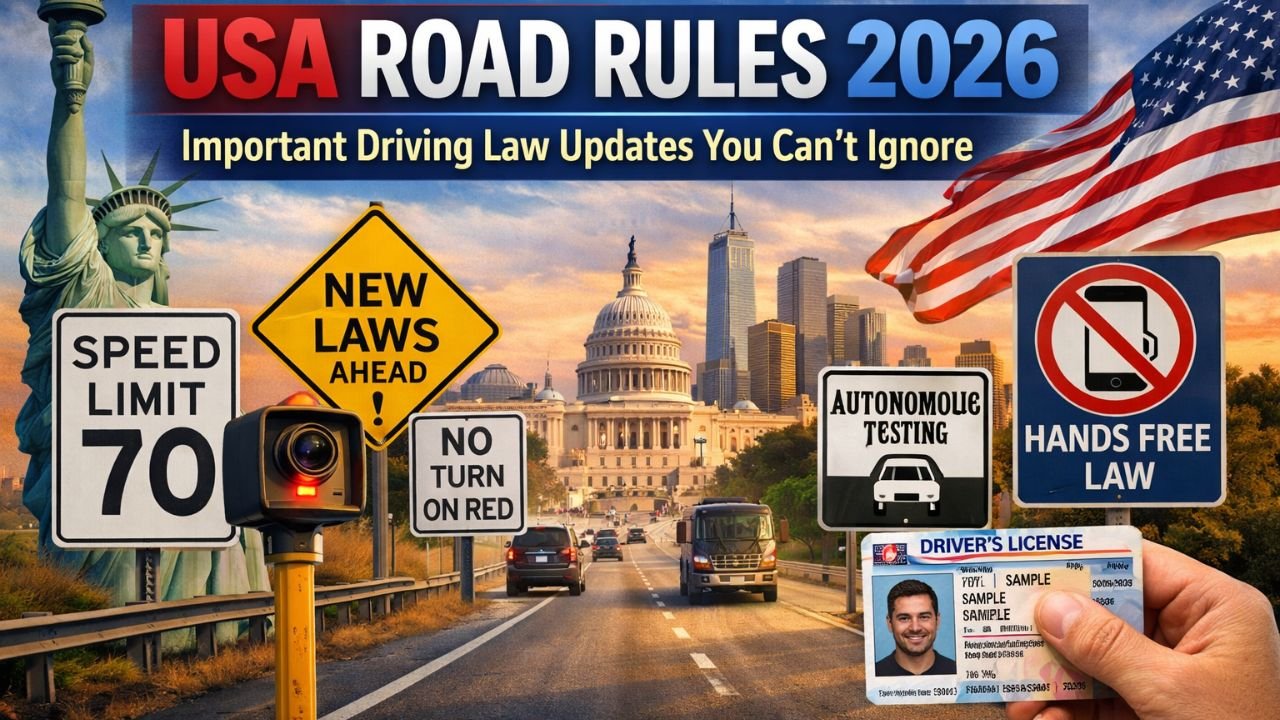
2026 is set to be the biggest change yet for Americans driving on the road. This year marks the first major change in how law enforcement stations focus on driving. Starting 2026, systems will be integrated that track how people use the road. Better technology, systems, and artificial intelligence will have a much larger role than what we the people have used for the past century. With many new Federal guidelines and State Laws that are in place to offset the growing number of accidents caused by people driving, people should have the correct information. The expiration of the first grace periods with no hands-free driving laws in place to the real-time tracking of people’s driving insurance, the road laws have become much more strict, precise, and expensive to ignore. Proactive steps and a better understanding of the new laws will lessen the penalty or violation on people’s insurance payments, driving license, and safety.
A New Era in Driving Enforcement
Legislation that usually provided warnings for distracted driving has changed to give zero warnings. Many states that had the leniency of secondary enforcement (where an officer could only ticket you for phone use if they stopped you for something else) have shifted to primary enforcement. Due to the rise of accidents caused by phone use while driving, federal authorities have placed additional restrictions. New enforcement techniques will use AI to target specific kinds of distracted driving, including use of a phone while driving. New AI enforcement cameras will soon be cropping up on well-known driving routes in states like New York, California, and Florida. These enforcement cameras will be able to ‘look through’ car windows and see if a driver is holding a phone and subsequently violate a driving camera rule. The mounted hand phone in the driving seat probably won’t be enough to evenly violate this new driving enforcement rule. Instead, it will specify mounted phone-like devices or systems that are completely operated by voice recognition.
New Automated Speed Enforcement and Improved Safety for School Zones Positively Impact Government Revenue
Road safety technology has brought School and Speed Sign Zones into the 21st century by introducing Average Speed Zones. Average Speed Cameras take pictures of vehicles at two different locations and calculate average speed. This technology removes the threat of people speeding towards and then slowing down after a speed trap. A lot of changes have been made to speeding zones at schools. Many places have made school speed limits lower than the general speed limit, extended after school ‘active’ hours, and made fines in these zones nearly double in 2026. Even if a driver has a perfect record, many states have school zone speeding fines that trigger automatic loss of driving points.
New Regulations and Shift in Responsibilities
Road safety is also less in the hands of the public for speeding violations. Infractions now have a new standard for compliance that is being adopted nationally for the new tiered penalty structure. Below is how the structure is expected to look.
| Regulation Category | 2026 Update | Potential Penalty |
| Distracted Driving | AI Camera Detection & Primary Enforcement | $250 – $1,000 + Insurance Surcharge |
| Insurance Verification | Real-time DMV/Insurer Data Linkage | Immediate Registration Suspension |
| Speeding (School Zones) | 24/7 Automated Enforcement Cameras | Double Fines & Mandatory Points |
| Senior Drivers (65+) | Mandatory In-Person Vision Retesting | License Restriction or Suspension |
| Commercial (CDL) | New Non-Domiciled Visa Requirements | Termination of Driving |
Technology and the Future of Autonomous Vehicle Accountability
It has been several years since U.S. federal agencies issued meaningful updates to the Federal Motor Vehicle Safety Standards (FMVSS). In 2023, the National Highway Traffic Safety Administration (NHTSA) updated several regulations concerning vehicles that do not have manual controls. One of the 2026 changes addresses the issue of who is responsible when self-driving vehicles violate traffic laws. The responsibility will fall, depending on the level of self-driving functionality, on the registered owner of the vehicle or the developer of the autonomous vehicle software.
There are new Event Data Recorder regulations that require all new vehicle crashes to record crash data to determine whether the cause of the crash is due to a human or system fault. This affects all new vehicles starting 2026.
Requirements for Senior Drivers and Commercial Drivers
The 2026 changes impact senior drivers and commercial drivers the most. Many senior drivers are required to take a vision test and mobility assessment when renewing their driver’s license. Commercial drivers are also going to see a lot of changes due to new Department of Transportation (DOT) rules. Beginning March 2026, states will no longer be able to issue or renew CDLs with visa status (H-2A or E-2) that are not domicile. This change will also pause CDLs for a lot of states while things are updated to be compliant with federal funding. These changes are just as important as following all traffic laws.
FAQs
Q1 Can I use my phone as GPS if it’s in my cup holder?
No. Most 2026 state laws require the phone to be completely hands-free and secured to the dashboard. Additionally, the phone must be mounted to the windshield or used through the car’s built-in system. If the phone is just in the cup holder, console, or dashboard, and the screen is active, then you could be cited for that.
Q2 What is the real-time insurance verification and how does it work?
Now, state DMVs have direct access to insurance company databases. If your insurance policy is active for even 1 to 2 days, the system will flag your registration. Without an officer ever pulling you over, you could get an email or a letter about your registration being suspended.
Q3 Do the new 2026 school zone speed limits apply on weekends?
In most downtown areas, yes. Some jurisdictions enforce school zone limits as “when children are present” or “24/7,” especially if the school is near a public park or community center, so it’s important to abide by the posted signs in your area.