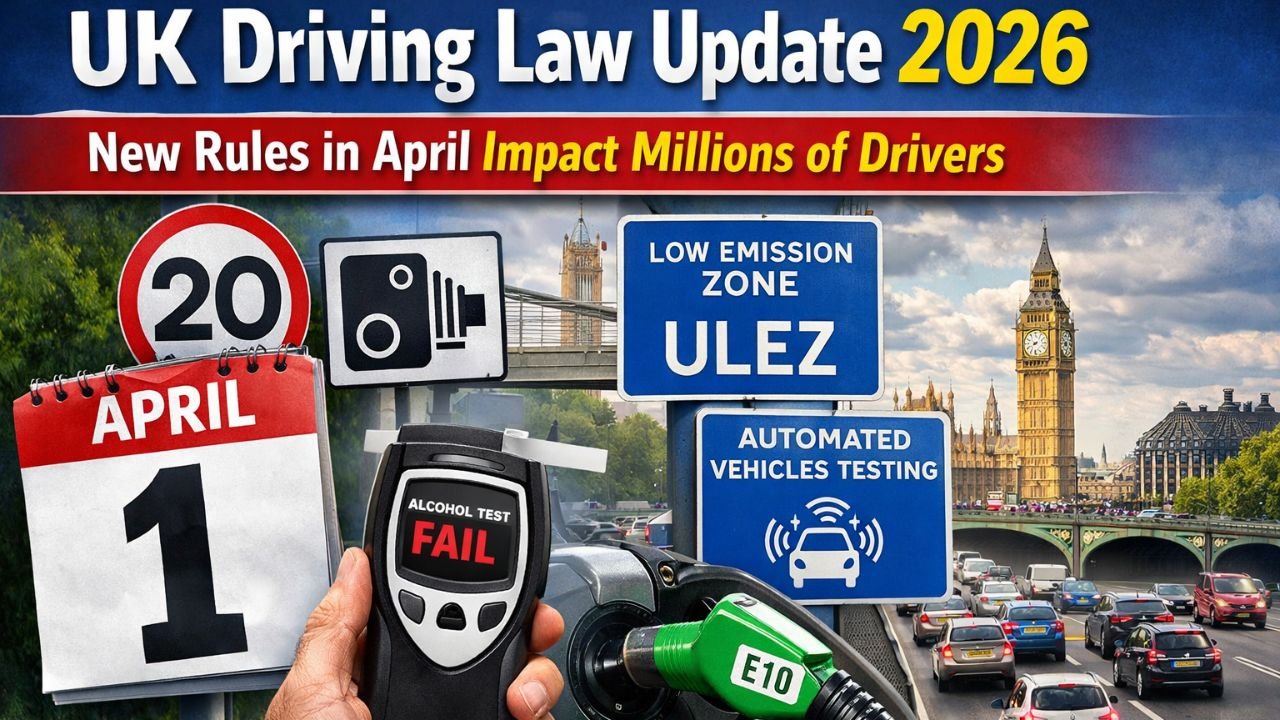
British drivers will experience changes this month with new driving laws for 2026. After the Autumn Statement from the government, expected changes for road usage and safety became clearer, especially with concerns for the environment. The new laws present new ownership costs and legal obligations for drivers of all vehicles and ages. New regulations will come with more costs, but some will offer tax incentives as part of the DVLA’s plans for a new, clean economy that will use less fossil fuels.
Changes in Value of Car Tax and EV Grants
The first and most direct effect most consumers will experience is from the revised Vehicle Excise Duty (VED) rates. Effective from this April, the standard rate for most cars will be £200. This is a modification intended to track with inflation. Most notably, changes to the “luxury car tax,” or Expensive Car Supplement, have been made. A positive change for the electric vehicle market, the gross receipts threshold for tax exemptions on zero-emission cars has been increased to £50,000. This means that many mid-tier family EVs, which have previously been considered “luxury” vehicles because of the higher manufacturing costs, will no longer be liable for the £440 annual supplement. On the opposite, owners of high-emission petrol and diesel vehicles will face a more significant challenge. The first-year rates for the most polluting cars will increase by £200. The unique fiscal stimulus clearly intends to direct consumers to more sustainable options, while also capturing the costs associated with maintaining the roads as fuel tax revenue declines.
Main Tax and Rate Changes Effective April 2026
| Change Category | Detail of New Rule | Impact on Driver |
| Standard VED | Rate increased to £200 per year | Applies to most cars after the first year |
| EV Luxury Threshold | Limit raised from £40k to £50k | Saves EV owners £440 annually if under £50k |
| Company Car Tax | BiK rate for EVs rises to 4% | Small monthly increase for fleet drivers |
| High-Emission Tax | Over 255g/km CO2 surcharge | First-year rate increases by £200 |
| London Congestion | Daily charge rises to £18 | Higher cost for central London commuting |
Additional Safety Improvements and Learner Driver Changes
Aside from the costs involved, the April 2026 update will address a number of important issues with road safety and the licensing process.
The Department for Transport has added new life-saving measures to the theory test, all new candidates will have to demonstrate some knowledge of CPR and the use of AEDs. This stands to make the UK driving population a possible network of First Aid responders, something medical charities have applauded. The DVSA has also tightened some rules around booking practical tests. In response to the black market’ for test slots, and the use of automated bots, booking or changing appointments, is restricted to the learners’ themselves. Additionally, changing appointments has been limited to two, and tests can only be rescheduled to different centers within a small radius of the original booking. This ensures a more equitable system of access for all test candidates.
New Requirements Related to Driving Ability and Safety
There are new changes to rules for senior drivers, and for the first time, the Ministry of Transport has proposed new, more comprehensive criteria for verification. For the first time, instead of self-reporting driving ability, senior drivers are now required to not only self-report, but also obtain an eyesight test from an eye doctor every three years when renewing their driver’s license. In addition, all drivers are now required to be seatbelted and, for the first time, seatbelted drivers may lose three points on their license, in addition to the regular fine. From an enforcement perspective, this change is about eliminating road deaths rather than focusing solely on the financial aspect of the fine. Losing the ability to drive as a penalty will be a more effective way to drive than just paying a fine.
The Future of Road Use and Environmental Regulations
Regarding the rest of 2026, these changes set the stage for further development. We see more Clean Air Zones (CAZ) being implemented in multiple cities in the UK. New, stricter, emissions rules are being applied to vans and older private cars. For those driving into central London, the 100% ‘Cleaner Vehicle Discount’ is now being removed, so even owners of electric vehicles will have to pay, at least, the discounted charge to enter the Con-gestion Charge zone. The regulations show us one thing; the ‘free ride’ that early adopters of green technology vehicles have enjoyed, is coming to an end, as the EVs have now become the standard. The govenrment is also trying to ‘tax’ electric driving by putting the normal electric car useage rules into place, while also making it easier to drive for the major polluter vehicles by putting aggressive pay-ment charges for these vehicles.
New Changes
It is not good enough for drivers to just keep track of the MOT date these days; checking the government’s all-important guidelines for personal VED rates is necessary, particularly for those who have just bought cars which are close to the value limit of £50,000. If you are a business user, your budget should account for the minor upward adjustment of Benefit-in-Kind (BiK) rates, while EVs company cars are far better from a tax perspective than any company car with a combustion engine. All in all, the upcoming changes for the year 2026 should remind you that with the privilege of driving, new changes in the law come responsibilities. From life saving responsibilities to greater contributions to the state, the objective is to provide safe, sustainable, and efficient mobility to the millions that depend on the roads in the UK.
FAQs
Q1 Does the new £50,000 EV tax threshold apply to cars I already own?
It is changes for retro EVs starting from April 2025. So even if your EV was previously impacted by the Expensive Car Supplement, as long as the list price is between £40,000 and £50,000, from this month you’ll no longer have to pay the extra £440 supplement.
Q2 Can a driving instructor arrange my practical test?
No. New rules coming into effect from Spring 2026 mean that your driving instructor cannot book, change, or manage your practical test for you. This is a part of a DVSA effort to address automated booking and ‘slot-selling’ issues.
Q3 Will I get penalty points for not wearing a seatbelt now?
Yes. Due to increased safety measures, not wearing a seatbelt has become a heavily fined offense. In addition to a maximum £500 fine, it now also comes with a penalty of three points on your driving record. This really highlights the surety of the offense.