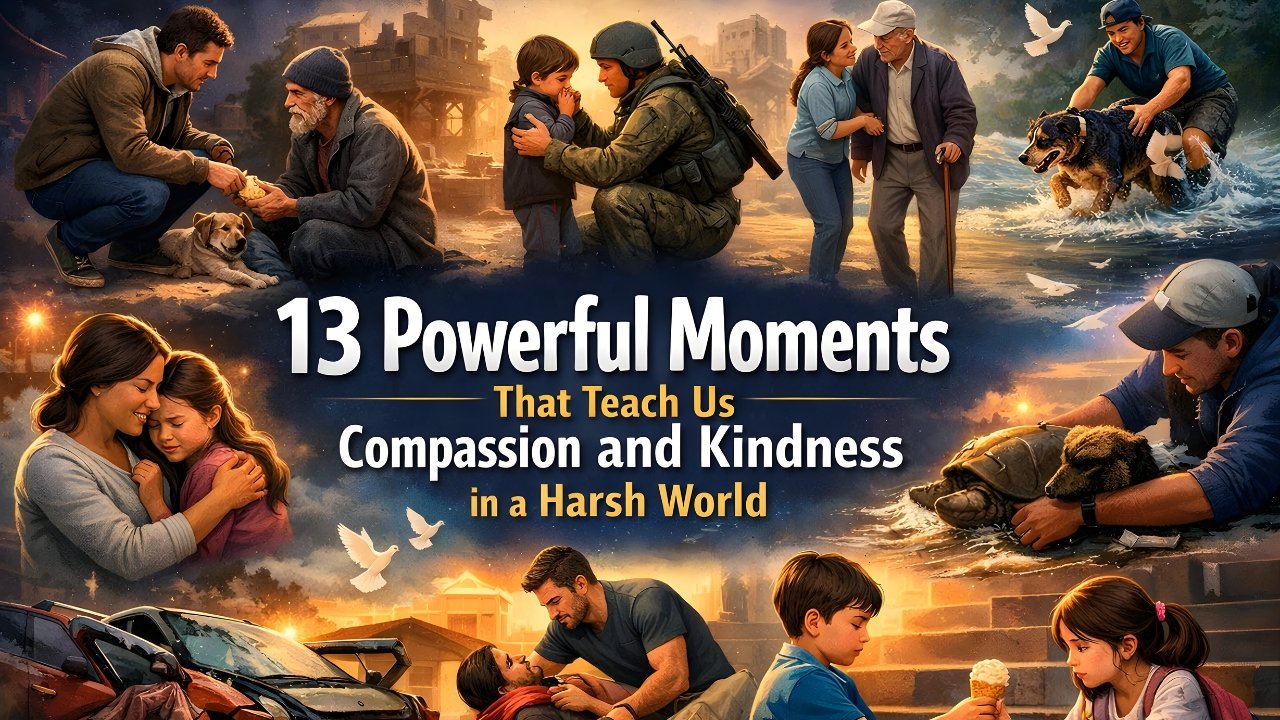
When people talk about the state of the world today, they often focus on digital conflict and angry headlines. But the world will still experience a world full of kindness, and the world will experience a world full of kindness, and the world will experience a world full of kindness. Empathy is more than a squishy feeling, but a social and neurological need. Societies, via the collective, live through resilience. Helping a stranger, aiding a distressed elderly person, or a neighbor leaving a meal for a grieving family, triggers the ancient biological response of “tend-and-befriend”. These thirteen moments of grace defy the negativity bias of everyday life, and remind us that kindness, rather than being a soft feeling, is a social and biological need, the survival of the fittest, and a part of civilizational thriving.
Understanding Altruism an the Physioogical Impact
It has been scientifically proven that altruism and the acts of being generous and selfless affect people in a variety of positive ways. For example, altruism can promote the secretion of a hormone called oxytocin. Oxytocin, a proven way to promote strong, positive social bonds, can lead to a decrease in blood pressure. It can also cause an increase in overall heart health. It seems safe to say, based on the above examples, that being altruistic in any form seems to have a positive health impact on people. So when a teacher helps an emotionally troubled student, or a community comes together to help an affected local business, the overall positive effects of altruism can positively affect the entire local eco-system and social system.
Community Benefits from Compassion
| Metric of Compassion | Individual Benefit | Community Benefit |
| Altruistic Action | Lowered cortisol levels | Increased social trust |
| Active Listening | Improved personal relationships | Conflict resolution |
| Volunteerism | Enhanced sense of purpose | Resource distribution |
| Empathy Education | Higher emotional intelligence | Reduced school bullying |
The biological impacts are only the tip of the iceberg on the many ways compassion can be beneficial for structural and systemic shifts. In organizational settings, when managers are more figuratively and literally warm than authoritative, they create rapport instead of silencing their employees and their ideas. This is because the predominant reason people become more innovative is psychological safety, or the belief that their mistake (or even their absence in a group) will not cost them. Whether it is a CEO taking a pay cut to avert layoffs or a coworker shifting their family emergency to help… Meetings like these foster a change from a workplace that feels hostile and competitive to a workplace that feels supportive. In their thirteen acts of compassion, from large-scale humanitarianism to simply holding a door for someone with heavy bags, these people show what a compassionate society that prioritizes humanity over productivity can be.
Cultivating Empathy in Everyday Interactions
Kindness begins with the active practice of a new way to look at the world. If someone is rude to you, it is likely a reflection of their own issues and problems. If someone is rude to you, it is likely a reflection of their own issues and problems. If you respond to someone with an aggressive tone, you are making the choice to escalate the situation; this type of thinking is framework for emotional maturity and is a choice that many people avoid. It is heartwarming to see an umbrella sharer offer their shelter to a stranger, as it provides a heartwarming example of what it means to be a good person. It’s up to you to Smile and make someone’s day better.
Value Behind Gracious Living
The power behind all thirteen moments is the potential that they all have to transform the way we remember people in the future. We won’t be remembered for our riches or the job titles that we had. We will be remembered for the impact that we had when we helped others when they were going through emotionally dark moments. We remember the nurse who stayed past their shift to be with the patient who had no visitors. We remember the child who shared their lunch with the child who forgot to bring lunch. Those two examples are what we remember when we think about purposeful and meaningful life. That act of kindness is not an act of weakness. That is an example of great strength. It is not easy to be kind. It is easy to be mean and rude. It takes a lot of work to be kind. When we choose to be kind and work to be more compassionate, we choose to be positive. By being positive, we work to be part of the hope and positivity in the world and help to ensure that the world still has good and positive moments, even when a lot of things are difficult and dark.
FAQs
Q1 Does being kind and showing compassion actually affect me physically?
It does because when someone participates in an act of kindness, their body releases less stress hormones, they are kinder, and more caring, and their body releases good mood hormones.
Q2 Can an adult learn to be empathetic?
Definitely. The adult brain is still capable of forming new connections that promote empathetic behavior. This can be done through mindfulness, active listening, and even volunteering.
Q3 How can I be kind when I feel burnt out or stressed?
Self-compassion is the starting point. It all begins with being kind to yourself. In order to show up for.
others, you need to do the work to show up for yourself.