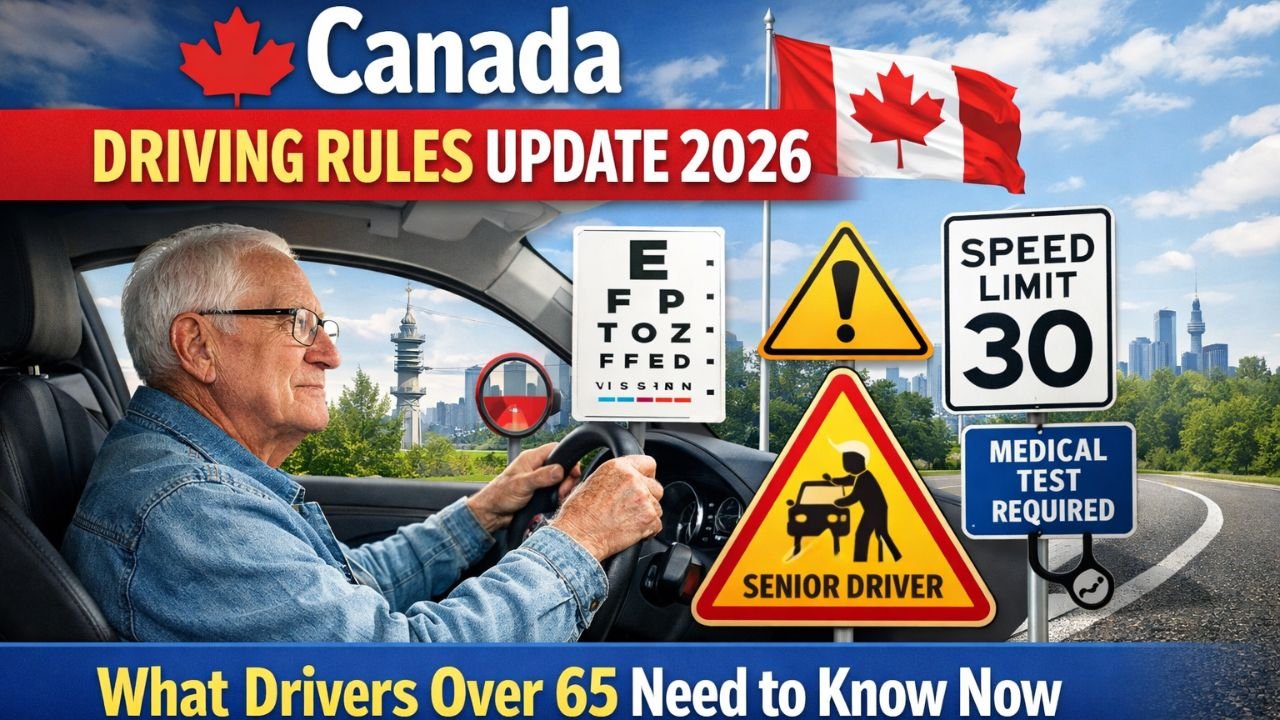
As Canada progresses through 2026, road safety is being updated alongside the increasing number of experienced motorists. For drivers over 65, remaining mobile is about more than comfort. It is about preserving the quality of life and independence. Recent changes in regulations across provinces show the focus is on functional fitness as opposed to driving age. Although the general rules of driving have not changed, the paperwork and medical assessments have become more customized. This means that still mentally and physically fit older drivers can keep driving, but it may require assisting others to adjust to different types of mobility. This renewal process is complex and the elderly drivers deserve to have to stress as little as possible.
Variations by Province and Required Health Assessments
As Canada has divided its driving laws by province and territory, so too are driving laws divided by province, which is why it’s so important to tell where in Canada you are driving. Beginning in early 2026, most provinces will have some form of medical reporting that is more preventative than reactive. In Ontario, for example, they are screening more people 80 and older, while in some cases, 70-year-olds are being screened after being involved in an at-fault accident. In medicine, Alberta has exams beginning at 75, followed by 80 and then every two years. These medical forms are indeed formal, however, they require screening to some extent by a doctor or licensed health practitioner to assess vision, hearing, memory, and reaction time. A province is introducing portals (e.g. British Columbia) to allow seniors to manage their health assessments online and minimize the anxiety caused by the post.
Improved Cognitive and Vision Testing
As detailed in the 2026 plan, a major area of enhancement is the depth of cognitive testing used in the license renewal process. Instead of relying on self-reports, transportation jurisdictions have become more focused on validated, cognitive screening. For senior drivers, cognitive renewal testing has been implemented in some jurisdictions. These include visuo-spatial and executive function tasks, such as the clock-drawing test and the letter-cancellation test. The standards for vision testing have not changed. The most common vision requirement is 20/50 visual acuity, which is often tested with corrective lenses. Evaluators have become more stringent concerning peripheral vision and depth perception, which is critically important for safe merging onto highways and navigating complicated intersections. The goal of screening is to determine a possible area of concern, but not necessarily to revoke a driver’s license. Typically, a concern results in a special road test and/or additional restrictions such as a limited area of driving (e.g. within a certain distance from home) or driving time (e.g. only during daylight hours).
Summary of Senior License Renewal Requirements by Province
| Province | Initial Age for Medical Review | Frequency of Subsequent Reviews | Key Renewal Components |
| Ontario | 80 Years Old | Every 2 Years | Group education, cognitive screening, vision test |
| British Columbia | 80 Years Old | Every 2 Years | Doctor-led medical exam, possible road assessment |
| Alberta | 75 Years Old | At age 80, then every 2 years | Medical examination report, vision and hearing check |
| Quebec | 75 Years Old | Every 2 years (after 80) | Self-declaration or medical/vision report if requested |
| Saskatchewan | 70 Years Old | Varies by health status | Vision screening, medical reports for specific conditions |
Driving in 2026
In addition to the law, the 2026 Canadian driving environment will include some of the most recent vehicle technologies and urban planning that will be necessary for seniors to learn. Technologies like adaptive cruise control, lane-keep assist, and 360-degree cameras will become commonplace, and understanding these technologies will possibly help seniors drive for a longer time.
Many safety groups have also suggested new “refresher courses” specifically geared to older adults. These courses modernize defensive driving techniques, including alternative ways to adjust mirrors due to decreased neck mobility and how to deal with the growing number of roundabouts in Canadian suburbs. Using these tech aids and new educational materials demonstrates the commitment to safety that provincial evaluators are looking for during renewal. It shows that the driver is experienced and flexible to the new driving environment.
The Renewal Timeline and What to Expect
There’s a lot to think about when renewing a driver’s license as a senior. Most provinces will send out renewal notices about 90 days in advance of the expiration to allow time to make a doctor’s appointment. If medical reports are required, there are time frames in which healthcare professionals must complete and submit them to avoid suspension of the license. With the new changes coming into effect in 2026, there will be more emphasis on “administrative fairness.” This means that when a driver is deemed unfit to drive, it will be clarified what to do to appeal the decision, and how to obtain a restricted license. These restrictions will be appropriate to the individual’s driving ability and will let the individual drive to the grocery store or the pharmacy, and will avoid driving on the 400-series highways or at night. If Canadian seniors take the time to be transparent and familiarize themselves with the process, they can make the transition as seamless as possible.
FAQs
Q1 Is the government responsible for paying for the medical exam?
Usually not; in most provinces, the medical exam that is a part of the Driver’s Medical Examination Report is not funded by the provincial healthcare insurance (for example, OHIP or MSP), therefore, the driver is required to pay the cost to the physician.
Q2 Will I have to take a road test every time I renew after 80?
Not usually. A road test is only required when there is a specific problem revealed in your cognitive screening, medical report, or driving record that needs to be assessed during a road test.
Q3 Can I still drive if I am prescribed certain medications?
Yes, as long as the medications do not affect your ability to drive safely. You need to consult with your doctor about your prescriptions during the medical review to make sure they allow you to drive safely.