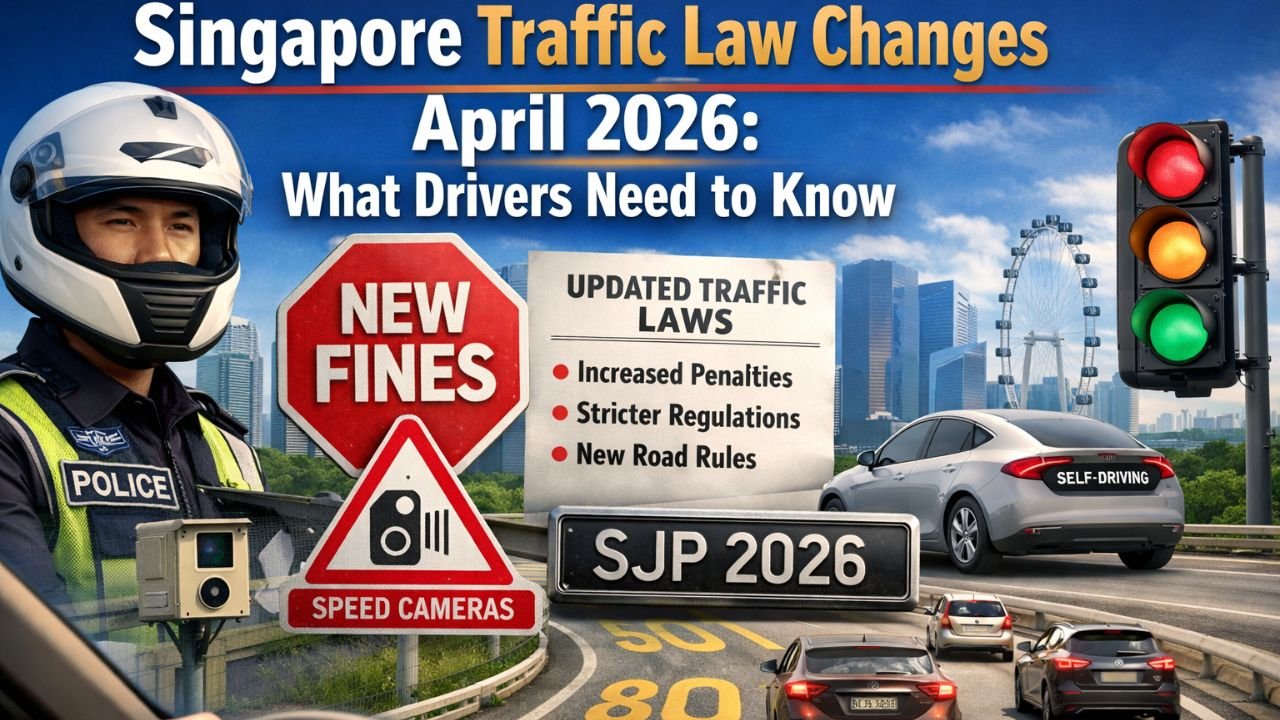
With each passing day in April 2026, we witness the exciting, rapidly evolving nature of the infrastructure in Singapore. This year, in addition to changes made by the Ministry of Home Affairs and the Land Transport Authority, major reforms to the Road Traffic Act have been introduced. These changes, the first of their kind in nearly ten years, aim not only to begin the Ministry of Home Affairs’ digital transformation of traffic management, but also to tackle the alarming number of speeding violations. These changes affect the average road user in Singapore, and it is important to understand their purpose to avoid heavy fines, or unnecessary frustrations. This month we begin the installation of the next-generation Electronic Road Pricing (ERP 2.0) technology, along with the first of many changes to the penalties of safety-related vehicle modifications, which will likely be the most welcomed by road users.
The Marketing Strategy for ERP 2.0 and Compulsory OBU Fitting
There are only a few more months left until the complimentary On-Board Unit (OBU) installation closes for vehicle owners. Currently, over 93% of vehicles registered in Singapore are equipped with the latest hardware, which is the basis for the forthcoming ERP 2.0 system. It is only a matter of time before the Land Transport Authority (LTA) note that legal processes for installation have begun. After that three months, owners of motorcycles and cars will have to incur additional costs to have the hardware installed: $35 and $70, respectively. Most notable, the legislation has changed so that the absence of the OBU, or any form of manipulation or unauthorized removal of the OBU, will now be considered a legal offense. The April guidelines state that such unauthorized removal and service of the OBU by non-certified personnel will result in an imprisonment term, or a fine, no less than $20,000. It is apparent that the OBU is no longer to be considered a simple payment system, but rather as a form of safety and economic control.
Harsher Penalties for Speeding and Safety Offenses
One of the first changes drivers will notice will be the steep increase in compositional fines and demerit points. The new changes to the penalties, which started earlier this year and are now being enforced this April, are a direct response to the 40% increase in the number of recorded speeding-related fatalities in previous years. The demerit points are more punitive at the lower levels of speeding. For example, going 20 km/h over the speed limit will now result in 6 demerit points instead of 4. In addition, heavy vehicles that have a higher potential for destruction will face even more significant penalties than light vehicles. Below is a summary of the new penalties the new charges that every driver should memorize to safeguard their driving record.
Revised Speeding Penalties (Effective 2026)
| Speed Above Limit (km/h) | Light Vehicle Fine | Heavy Vehicle Fine | Demerit Points |
| Up to 20 km/h | $200 | $250 | 6 Points |
| > 20 to 30 km/h | $300 | $400 | 8 Points |
| > 30 to 40 km/h | $400 | $500 | 12 Points |
| > 40 to 50 km/h | Court Action | Court Action | 18 Points |
| Above 50 km/h | Court Action | Court Action | 24 Points (Immediate Suspension) |
Crackdown on Illegal Modifications and Unregistered Vehicles
April 2026 also marks a turning point for vehicle safety enforcement regarding modifications. The authorities have observed an uptick in illegal alterations that compromise vehicle structural integrity or increase noise pollution. The revised law now doubles the maximum fines for individuals caught with illegal vehicular modifications to $20,000, while companies or workshops performing these services can face fines of up to $40,000. This is coupled with a “zero-tolerance” approach toward unregistered or deregistered vehicles.
Because such vehicles have no insurance or roadworthiness inspections, using them on public roads is now considered a high-risk criminal offense. The new ERP 2.0 system has made it easier for Traffic Police to detect these vehicles, track them, and impound them instantly.
Safety in Friendly Streets and Silver Zones
The April 2026 updates aim to safeguard vulnerable road users, starting with initiatives in ‘Friendly Streets’ or ‘Silver Zones.’ These are areas with high pedestrian traffic, such as near hawker centers, schools, and MRT stations. In these areas, speeding, running a red light, or not yielding to pedestrians will result in an additional two demerit points on top of the harsher penalties. The composition sum for these offenses will also be increased by an additional $100. The aim of this tiered penalty system is to create a psychological buffer for drivers to be especially careful when going from major expressways to the heartland areas. The aim is to reduce the culture of careless driving in residential areas so that avoidable accidents don’t happen.
Changes to Driving to Keep Us Safe
With the new mobility scooter rules coming this June, and with the rollout of ERP 2.0 in 2027, the new scooter laws giving us until April 2026 to adjust our driving behavior, and our driving equipment. The new driving rules will result in the rebuilding of the trust and safety of Singapore’s roads for drivers by combining high tech with expensive enforcement. Driving will become safer for the good driver behavior, but for poor driver behavior and rule breaking driver, the costs will be extremely high. Staying up to date with OneMotoring and keeping your vehicle in factory condition will help soften the impact of these changes. By exercising control of the new technology and obeying the laws, we will all help create a road system that prioritizes life rather than speed.
FAQs
Q1 What happens if I don’t make the deadline for the free OBU installation?
If you don’t make the date in your last invitation, you will no longer be eligible for the free installation. You will be forced to pay an installation cost ($35 for motorcycles and $70 for other vehicles) and if you drive without the mandatory unit, you will be in for enforcement action.
Q2 Are there increased penalties for speeding in school zones versus regular roads?
Yes. There are extra two demerit points and an additional $100 penalty on top of the revised speeding fines for offenses in School Zones, Silver Zones, and the new Friendly Streets.
Q3 Can I still use my mobility scooter that goes 10 km/h?
While there is a transition period up until the end of 2028 for existing devices, you will need to ensure that as of April 2026 your mobility scooter does not exceed 6 km/h on shared public paths. From June 2026, new rules will come into effect that will require a Certificate of Medical Need for many users.